

Cryptography developed at MERI for civilian drones
Global Navigation Satellite System (GLONASS) and the Element Group of Companies (Element) have introduced an identifier for civilian air drones…
15.07.2026
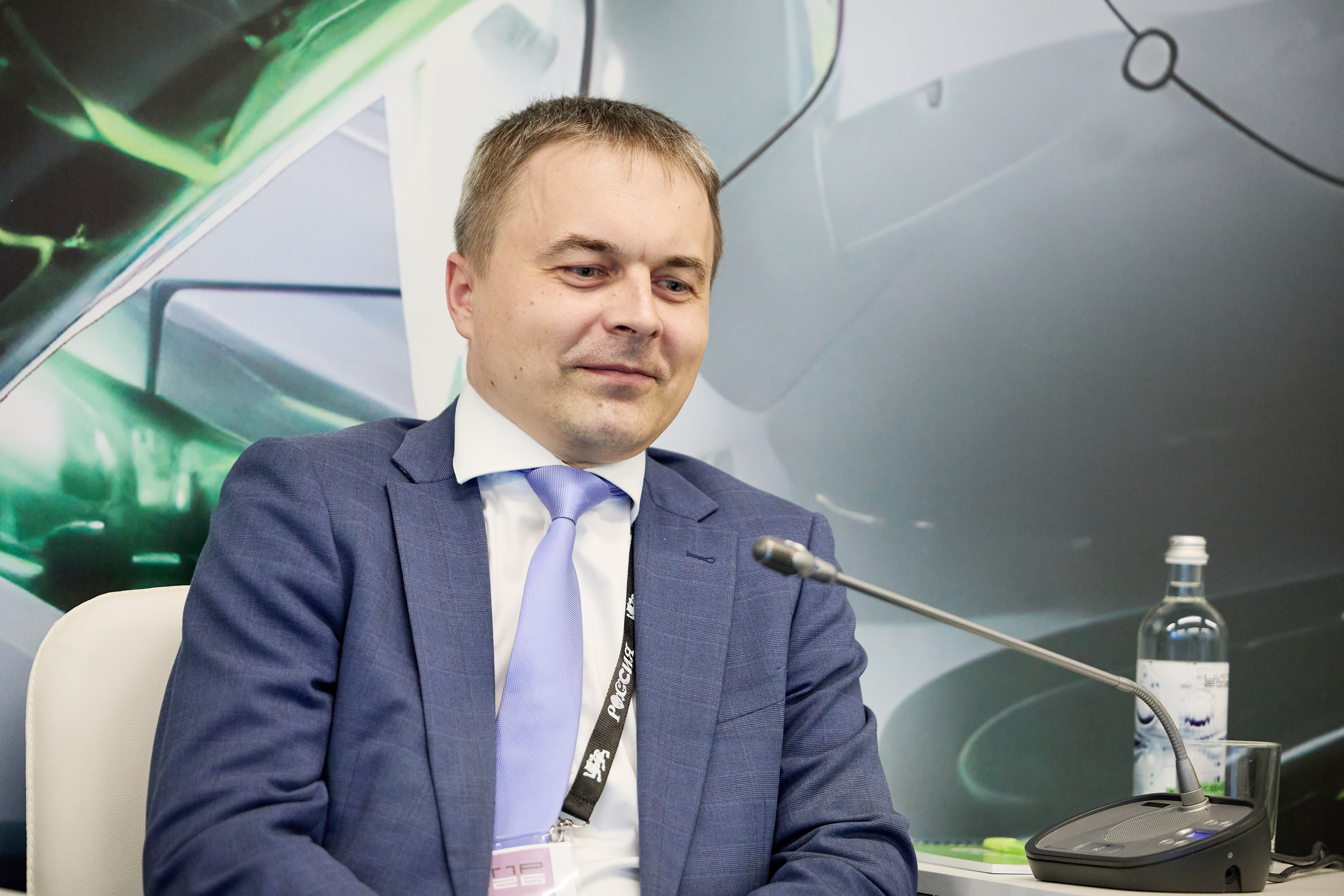
Alexander Kravtsov, General Director of MERI, spoke at the session "Digital Microelectronics Circuit: How to Optimize Production Processes," which was held at the Conference on the Digitalization of Industrial Russia (CIPR-2026) in Nizhny Novgorod (Russia).
The agenda of the conference's plenary session is the Russian industry is moving from the stage of replacing individual foreign software products to building its own digital frameworks, where data becomes the foundation for design, production, quality control, and engineering decision-making. Representatives of such companies as YADRO, Sberbank, NZPP Vostok, Scientific-production enterprise „ISTOK“ and Moscow Institute of Electronic Technologies presented their successful cases of digital solutions.
Semiconductor manufacturing generates large amounts of data at every stage, from material parameters, equipment, and clean rooms to routes, formulations, measurement results, wafer inspection, and output testing. Collected and normalized data begins to work when it is linked to a specific stage of production and is available in a form suitable for analysis and decision-making.
Alexander Kravtsov noted that more than one area and more than one data class influence the final version. The yield rate is affected by the raw materials, the condition of the equipment, the operating parameters, and the decisions made by engineers at all stages. The goal of the digital loop is to find dependencies within stages and identify crosscutting relationships from initial parameters to the characteristics of finished products.
According to A. Kravtsov’s speech, the industry needs a system that starts with industrial data collection at all stages. It should include a data storage and model version layer, a classical physical and chemical modeling layer, an environment for developing and testing new models, and application services that help manage specific processes. This framework will allow seamless integration of experimental data, engineering calculations, digital twins, and AI tools, while maintaining a connection to real-world production constraints.
Special attention is paid to inter-organizational interaction. Kravtsov noted that the digital platform should be built on the principle of multi-level access: critical data remains within the owner's perimeter, for industry use, anonymized and standardized sets are formed. This will ensure the exchange of results without disclosing commercial secrets, accelerate the replication of successful practices, and optimize standard processes.
Global Navigation Satellite System (GLONASS) and the Element Group of Companies (Element) have introduced an identifier for civilian air drones…
On July 10, 2026, in Yekaterinburg, Molecular Electronics Research Institute (part of the Element Group of Companies, MOEX:ELMT) presented domestic…
The Saint Petersburg Electrotechnical University "LETI" held a roundtable discussion as part of the II International Forum on Microelectronics and…